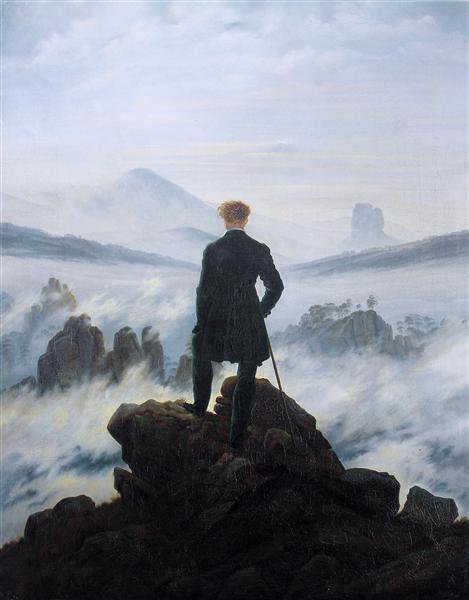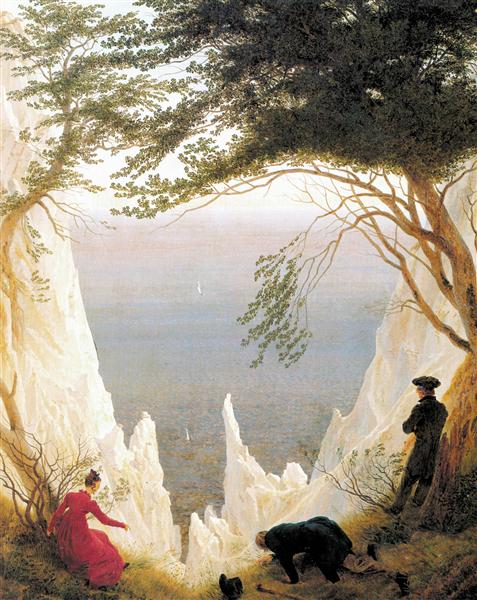
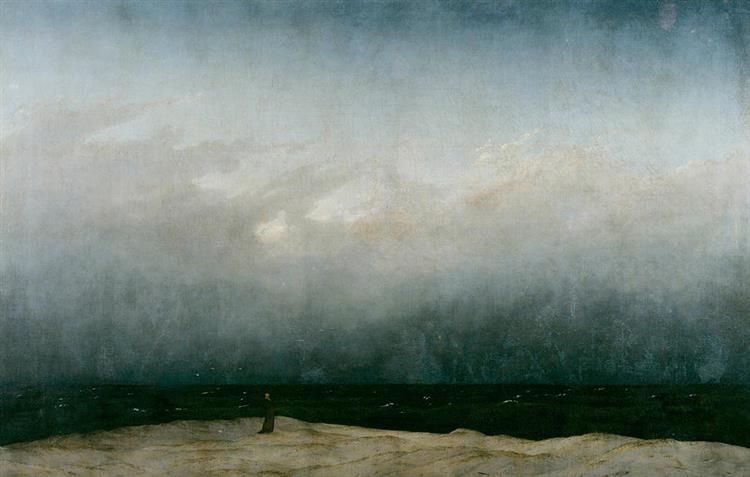
No one knows isolation like Caspar David Friedrich. At the tender age of seven, family members around him died one after the other. First his mother, then one sister, a brother and another close loved one. By the time he was thirteen, he had an up-close relationship with death, loss and abandonment.
Instead of hiding behind a veneer of toughness to avoid being alone, he embraced solitude and even made it beautiful. The male figures in his paintings are strong, majestic and all alone. For Friedrich, being solo wasn’t a sign of weakness. It is an opportunity to appreciate your position within the natural world.
“I must stay alone and know that I am alone to contemplate and feel nature in full; I have to surrender myself to what encircles me, I have to merge with my clouds and rocks in order to be what I am. Solitude is indispensable for my dialogue with nature.” – Caspar David Friedrich
The wrong red pill
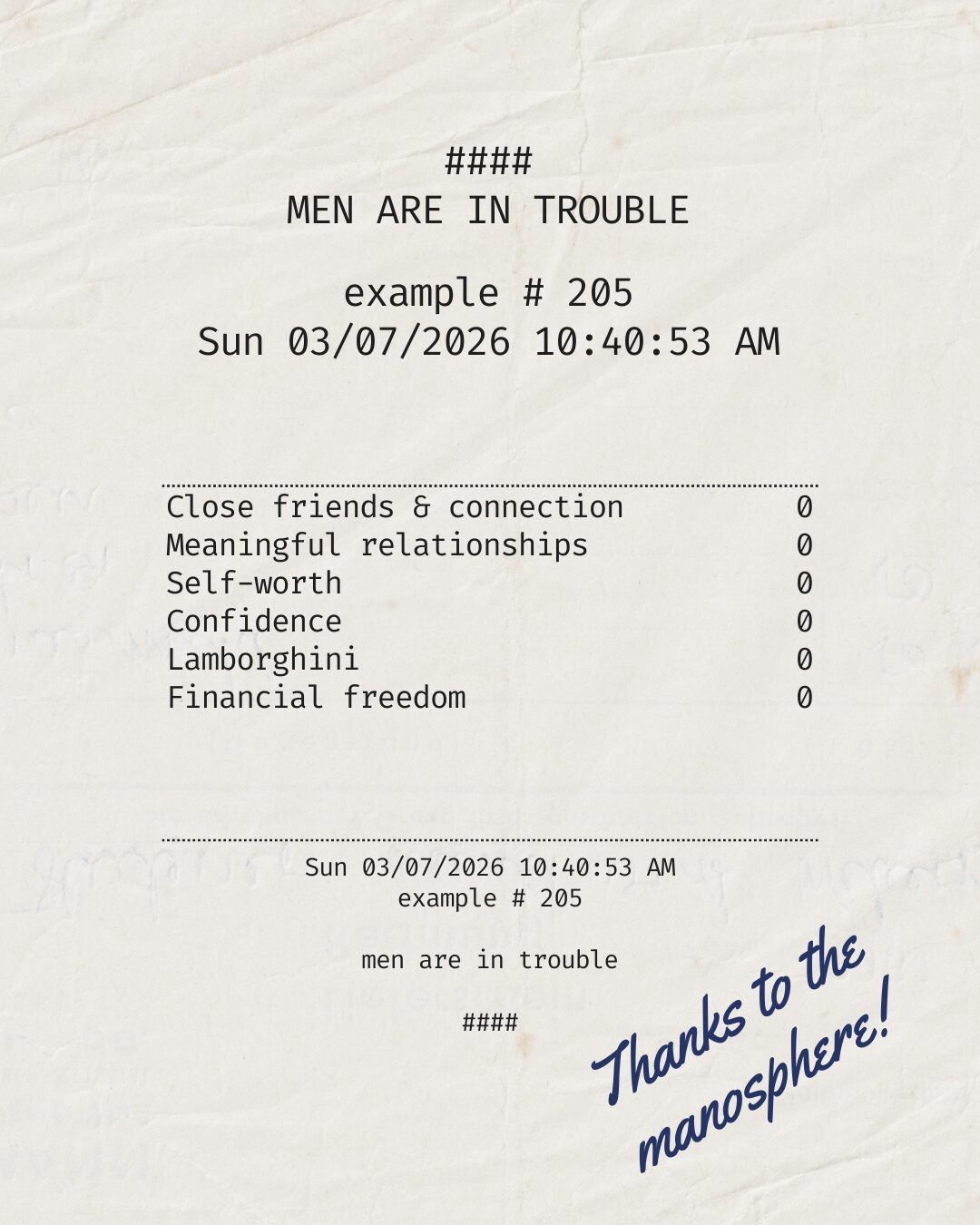
Although these words by Friedrich are profound, they’re from centuries ago. Today, loneliness, particularly among men, is an epidemic across societies. Even in Canada, 63% of our young men report feelings of considerable disconnection. But as men reach out for community, the manosphere snatches them and drags them deeper into isolation.
The manosphere is a shapeshifter, disguising itself as a safe space for ‘high-value’ men. Like the red pill in The Matrix exposing Neo to the truth, the manosphere vows to show men the inner workings of the world. It promises total domination in every important category: relationships, finances and appearance. The problem is that this space is an echo chamber of grifters who sell snake oil solutions to impressionable men. Solutions that red pill influencers never seem to use themselves.
On his podcast, influencer David Cooley claimed that when it comes to dating, single mothers are for “recreational use” only. He calls stepdads ‘beta males,’ wasting their time raising someone else’s child. That did not stop him from dating a single mother and becoming a stepfather of three. Cooley is not the only hypocrite. The red pill gym bros are on steroids, and the relationship gurus are not in healthy unions. Even worse, the financial alpha males steal from their loyal audiences through crypto-meme rug pulls.
The manosphere is a dangerous space for young men to be in. They become prey instead of alphas, religiously following the words of professional fraudsters. Luckily, there is a way modern men can release themselves from this bear trap. The 18th-century sentiments of a German artist can help us conquer the manosphere.
The power of the natural world
Imagine you’re standing on a high precipice way above the clouds and mist, gazing out at the world around you with no one else in sight. In that moment, would you consider yourself lonely?
Friedrich believed that man shares an intimate bond with the natural world around him. Even when the closest person is a world away, we are still interconnected with the sunset, the changing of the leaves and thick fog sitting above the sea.
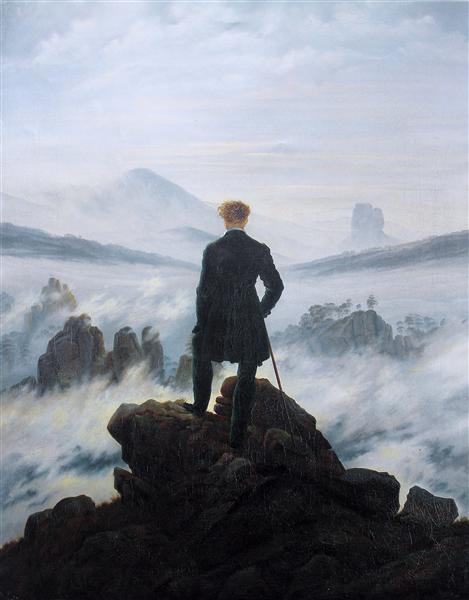
Many at the time labelled him a *misanthrope for his love of landscapes. But even though he painted people who are alone, Friedrich rarely painted loneliness. His subjects are one with their surroundings, blending with the clouds or the rocks in a way that destroys hierarchy. Friedrich forces us to see the landscape as an equal subject to the man.
*misanthrope: a person who hates or distrusts humankind
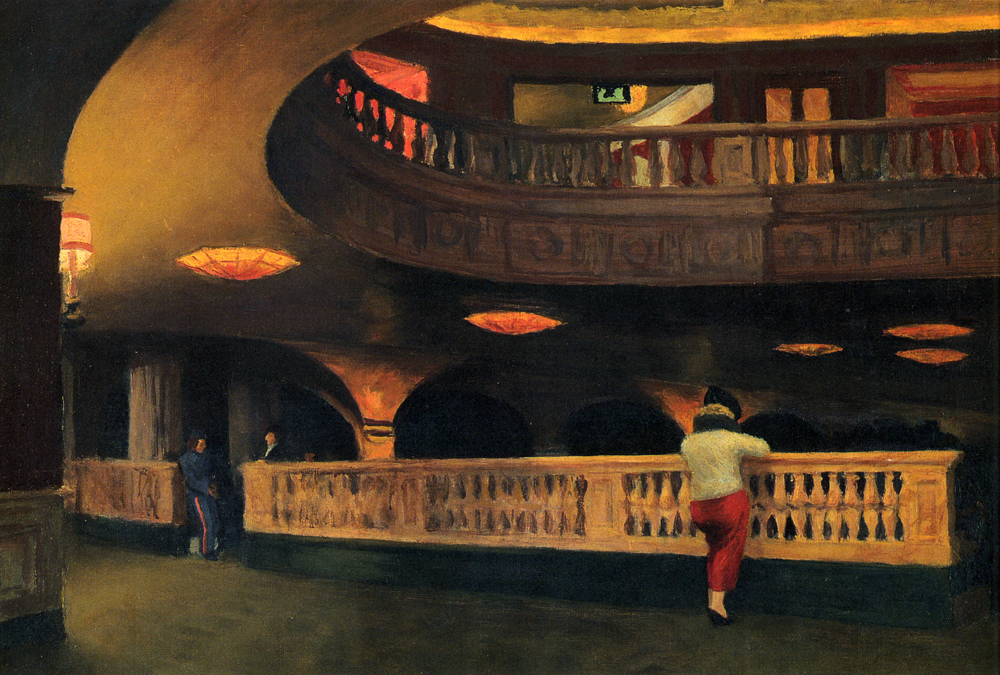
Another artist whose work routinely comes up when discussing loneliness is Edward Hopper. Hopper’s approach clashes with Friedrich’s by showcasing disconnected subjects who are surrounded by other people.
In The Sheridan Theatre, a lone woman on the right stands far from the two men on the stairs. Even the two men, standing closely, are avoiding eye contact. The man in black stares straight ahead at the man in uniform, who lowers his gaze. Even with three subjects in a frame, there is no emotional connection. Hopper paints people as isolated loners.
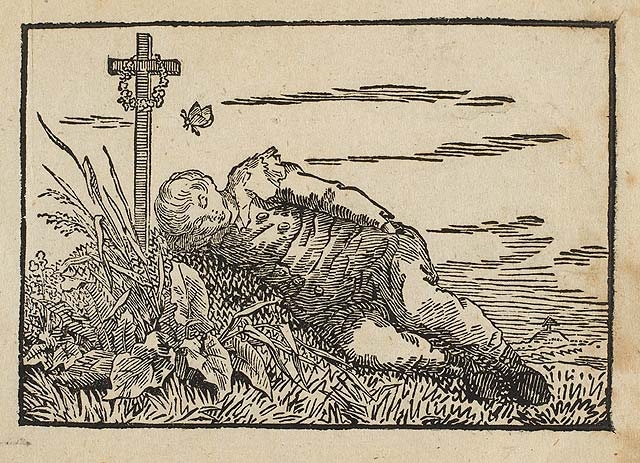
In contrast, Boy sleeping on a grave does not emit that same feeling of loneliness. It’s hard to see a graveyard as a happy place, yet the young boy is peaceful. I think he’s smiling. He belongs in the scene and takes his place alongside the butterflies, the lush leaves and flowers. Knowing your place within the wider world offers comfort in times of distress.
Take time to recalibrate
Solitary communion with nature is necessary to develop a strong sense of self. Solitude recalibrates your moral compass. Without established principles, men become vulnerable to fake portrayals of masculinity online. They end up mesmerized by streamers and influencers who lie about eating raw liver every day, flex with rented cars and whose girlfriends are also on their payroll.
These successful men with so much money aren’t successful due to their good looks or their ‘grindset’ business acumen. They get rich selling courses to other men. They present themselves as masters in their field and charge upwards of $10,000 for courses and bootcamps. Few participants know that their mentors are swindlers with disturbing criminal histories.
My advice to modern men
I’d like to start by stating that I am a woman. I admit that I cannot experience the strange phenomenon plaguing young men. But everyone can see that the patterns are unsettling. The red pill movement weaponizes loneliness. It takes young men in need of guidance and shoves them through a pipeline that leads to toxic masculinity at best and white supremacy at worst.
Social media tells us that as young people, we should be having the time of our lives, non-stop. Young men should be sowing their wild oats far and wide and arriving at exclusive clubs in expensive cars. Friedrich would disagree. Paintings like The dreamer or View of Schmiedebergerkamm show us that men can be confident without company. Many of his subjects have their backs turned to us, yet we can feel their exuberance.
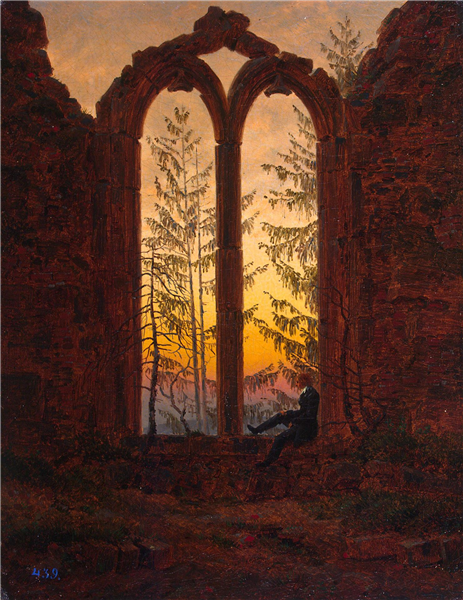
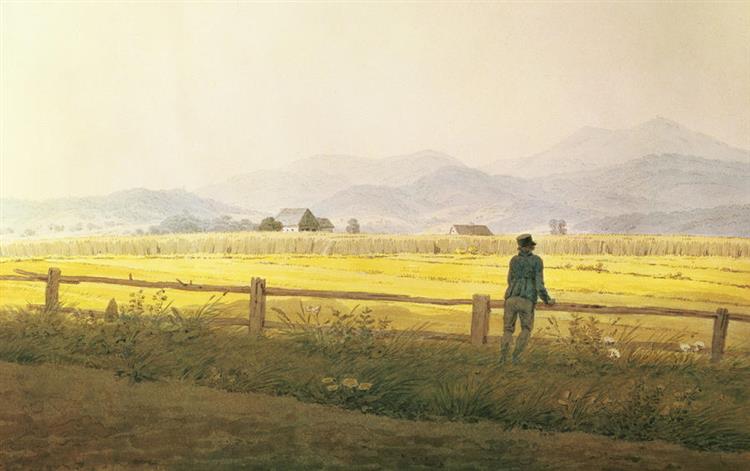
My advice to modern-day men echoes Friedrich’s sentiment: solitude is necessary to achieve inner strength. Whether it’s a night drive at 1 am or a weekend solo camping trip on the outskirts of the city, men need to be alone and far away from Andrew Tate. Only then can their brains begin to debug from the constant attack of the algorithm, and they can value the solitude of the world around them. As a bonus, for the most part, the natural world is free.
About the artist
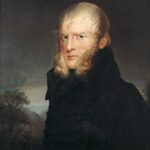
Although Caspar David Friedrich is regarded today as one of the most important German Romantic painters, his work during his time caused some controversy. He painted landscapes not as backgrounds to the human experience but as equal participants in the scene. Not everyone agreed with this vision.
Friedrich was most active from 1798 to the 1830s, when he created the majority of his most popular works. These pieces featured both men and women enveloped by the vast mists, fogs and forests of his creations.
He was born in 1774 in Greifswald, a town perched alongside the Baltic Sea. The surrounding coasts of northern Germany became his muse and are depicted in many of his works. You can find the Baltic Sea in Chalk Cliffs on Rügen and, of course, Friedrich’s most famous piece, The Wanderer Above the Sea of Fog.